
Choosing the Right Part
Choosing the Right Part: How NAMI and TASNEE Reduced Costs and Strengthened Supply Chain Resilience
When evaluating spare parts for additive manufacturing, the purchase price is only part of the equation. Long procurement cycles, overseas sourcing, production downtime, and inventory challenges often represent a much greater cost to industrial operations.
Recognizing this opportunity, NAMI partnered with TASNEE to identify components where additive manufacturing could deliver the greatest business impact.
Rather than asking "Can this part be 3D printed?", the question became:
"Which part should be?"
That question led to two successful projects, starting with an impeller and later expanding to a pump casing.
Choosing the Right Part
The success of additive manufacturing begins with selecting the right application.
Rather than simply replacing conventionally manufactured components, NAMI worked with TASNEE to identify a part where additive manufacturing would create the highest business impact.
The impeller emerged as the ideal candidate because it combined three critical characteristics:
- High procurement cost
- Long traditional lead time
- Dependence on overseas manufacturing, presenting a strong localization opportunity
By addressing these challenges, the project aimed not only to reduce manufacturing costs but also to improve spare part availability, shorten procurement cycles, and strengthen supply chain resilience.
Following the successful implementation of the impeller, TASNEE expanded the collaboration by selecting a pump casing as another candidate for additive manufacturing.
From Digital Design to Operational Performance
Once selected, the impeller was engineered for production using Direct Metal Printing (DMP) and manufactured using Ni718, replacing the conventionally manufactured Nickel Alloy Hastelloy C4. The component was produced on NAMI's DMP Flex 350 Dual system before undergoing precision machining, inspection, and final finishing to meet operational requirements.
Similarly, the pump casing was successfully manufactured using Ni718 as an alternative to the conventionally manufactured Nickel Alloy Hastelloy C-276, demonstrating additive manufacturing's capability to produce components designed for demanding industrial environments.
Following installation, both components have been operating successfully in TASNEE's facility for approximately two years, validating the reliability and performance of metal additive manufacturing in real industrial applications.
Customer Testimonial
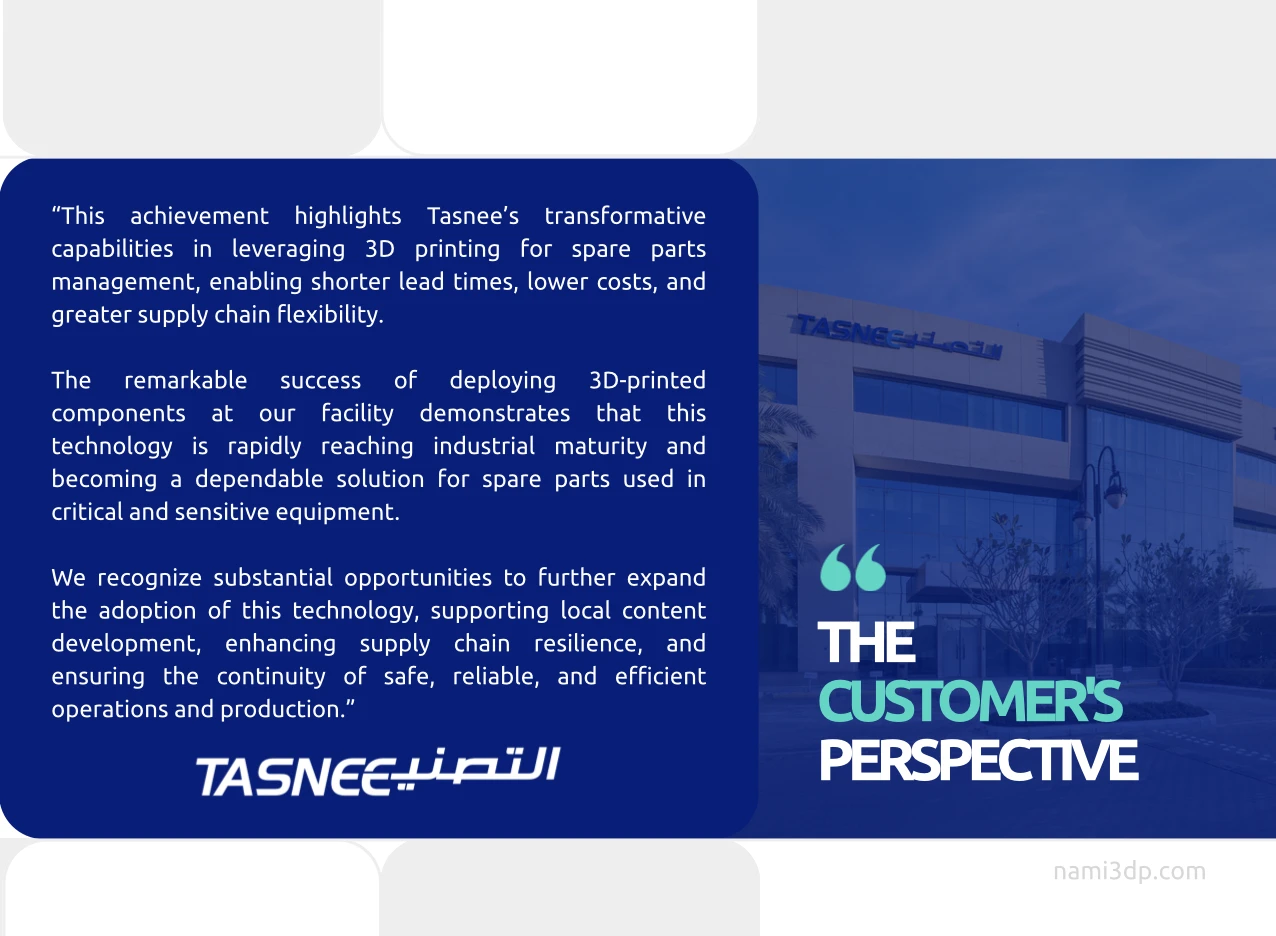
This achievement highlights Tasnee’s transformative capabilities in leveraging 3D printing for spare parts management, enabling shorter lead times, lower costs, and greater supply chain flexibility.
The remarkable success of deploying 3D-printed components at our facility demonstrates that this technology is rapidly reaching industrial maturity and becoming a dependable solution for spare parts used in critical and sensitive equipment.
We recognize substantial opportunities to further expand the adoption of this technology, supporting local content development, enhancing supply chain resilience, and ensuring the continuity of safe, reliable, and efficient operations and production.
- TASNEE
Project Results
The collaboration delivered measurable business value across both projects.
Impeller | Pump Casing | |
Lead Time | 3 weeks | 4 weeks |
Cost Saving | 86% | 78% |
Localization | ✓ Enabled local manufacturing | ✓ Enabled local manufacturing |
Digital Inventory | ✓ Digitized and ready for on-demand reordering | ✓ Digitized and ready for future production |
Part Life |
For the pump casing, additive manufacturing significantly reduced production lead time compared to conventional manufacturing while minimizing material waste and improving supply chain responsiveness.
Beyond Manufacturing: Creating Long-Term Value
The impact of this collaboration extended well beyond reducing production costs.
By digitizing both components, TASNEE now has qualified digital assets that can be manufactured on demand, reducing dependence on physical inventory and enabling faster response to future maintenance requirements.
At the same time, localized production reduced reliance on overseas suppliers, helping strengthen supply chain resilience while supporting Saudi Arabia's localization ambitions.
Together, these benefits demonstrate how additive manufacturing can improve operational readiness while creating a more agile and responsive supply chain.
Conclusion
The collaboration between NAMI and TASNEE demonstrates that the greatest value of additive manufacturing is not simply producing parts differently, it's solving business challenges differently.
By targeting components with high procurement costs, extended lead times, and localization potential, organizations can reduce costs, accelerate part availability, digitize critical inventory, and build more resilient supply chains.
As industries continue to seek greater efficiency and operational continuity, additive manufacturing is proving to be more than an alternative production method; it is a strategic enabler for smarter spare parts management.
 article
INITIATION OF AM FACILITY QUALIFICATION FOR OIL & GAS PARTS BY NAMI AND DNV
 article
NAMI BECOMES THE FIRST SAUDI ARABIAN COMPANY TO RECEIVE CERTIFICATION FOR 3D PRINTED PARTS: PUTTING
 article
NAMI and MAADEN | A Groundbreaking Partnership in 3D Printing
 article
Signing of Digital inventory and 3D Printing agreement between Saudi SEC and NAMI
 article
King Saud University and NAMI: A New Era of Innovation and Collaboration
 article
Siemens Energy and NAMI Collaboration
 article
NAMI: Revolutionising Manufacturing in the Kingdom with 3D Printing
 article
Towards a Local Industrial Future: How NAMI is Advancing Digital Manufacturing in Saudi Arabia
 article
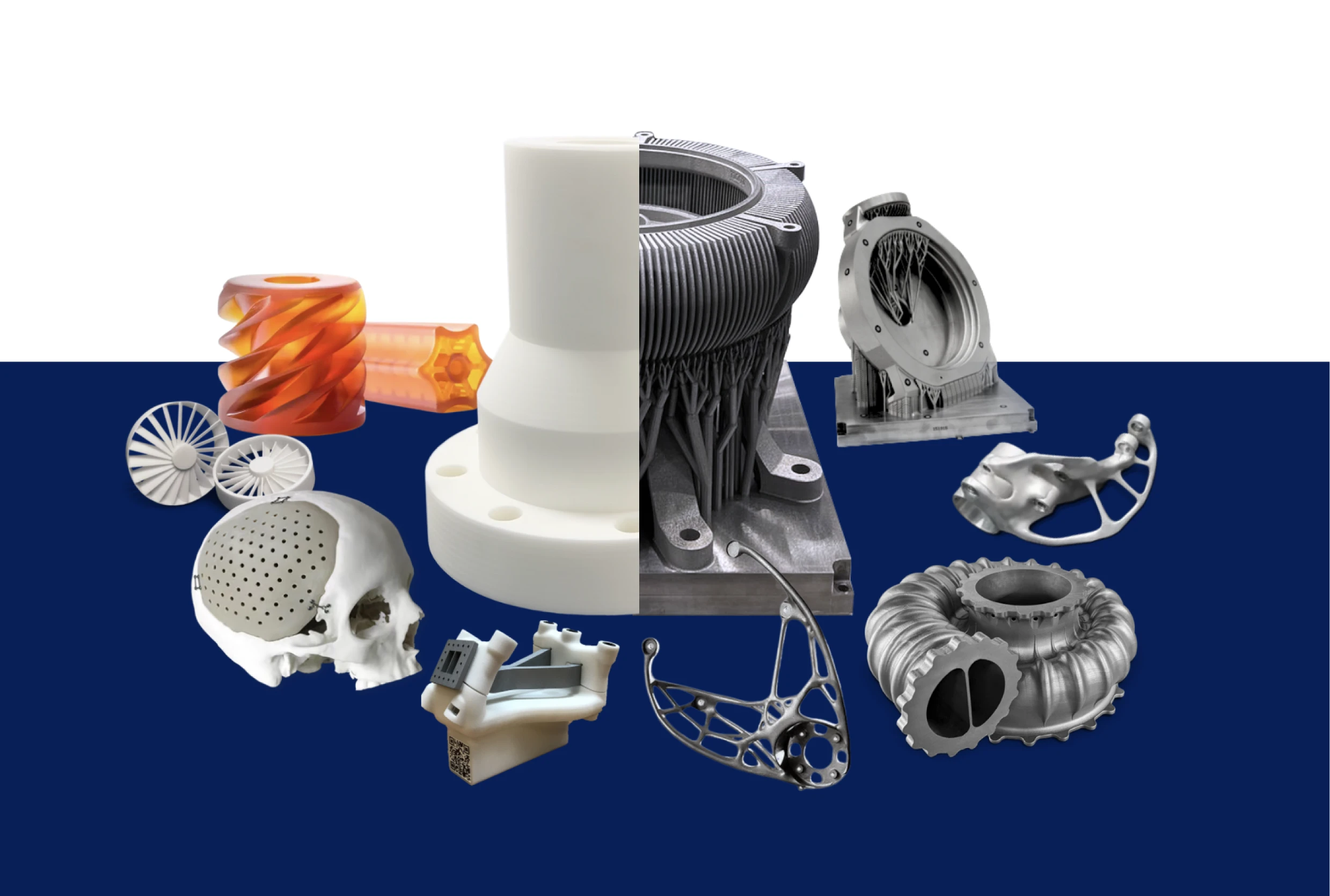
Which 3D Printing Technology Best Fits Your Needs?
 article
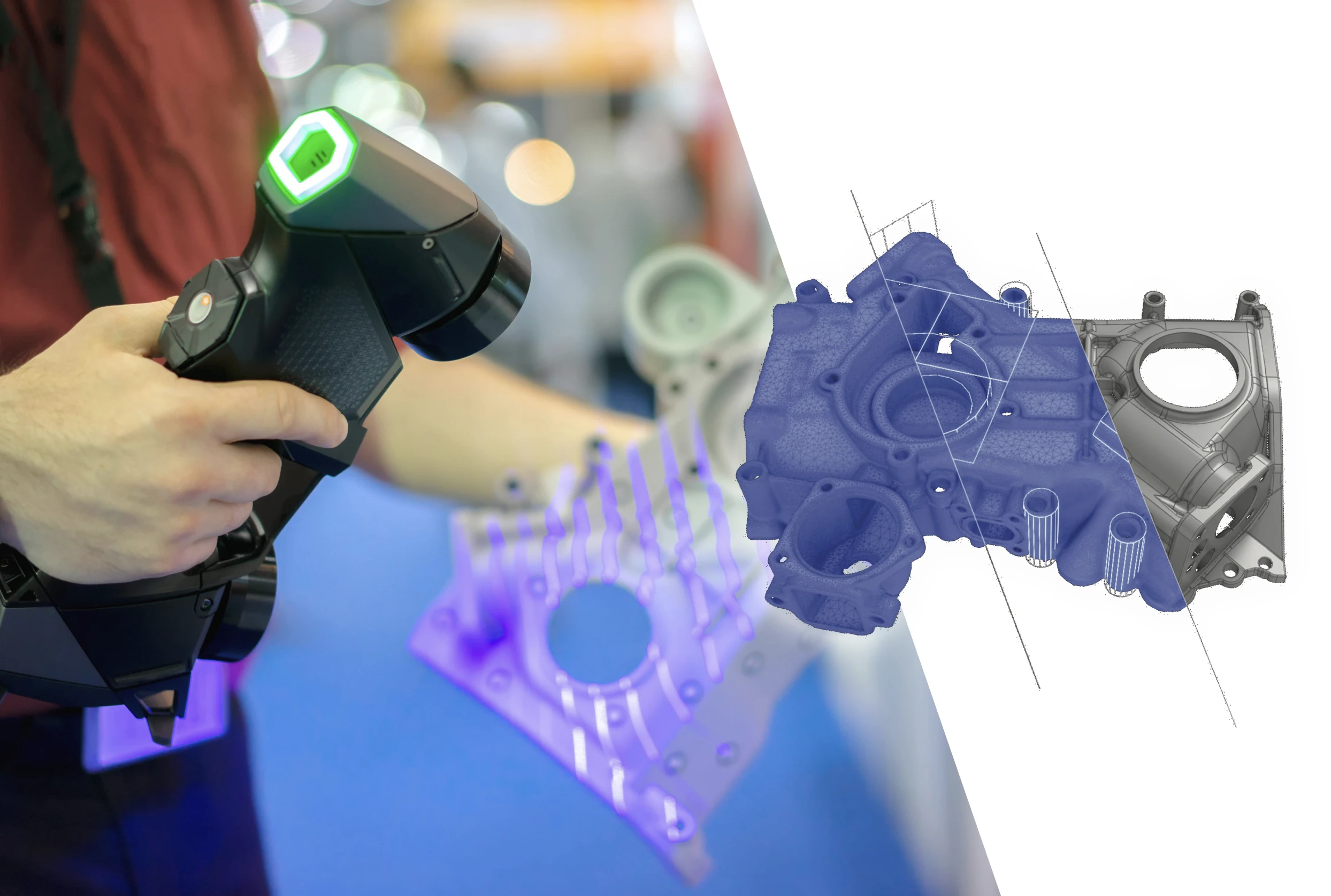
Why Additive Manufacturing Is a Game-Changer for Saudi Industry?
 article
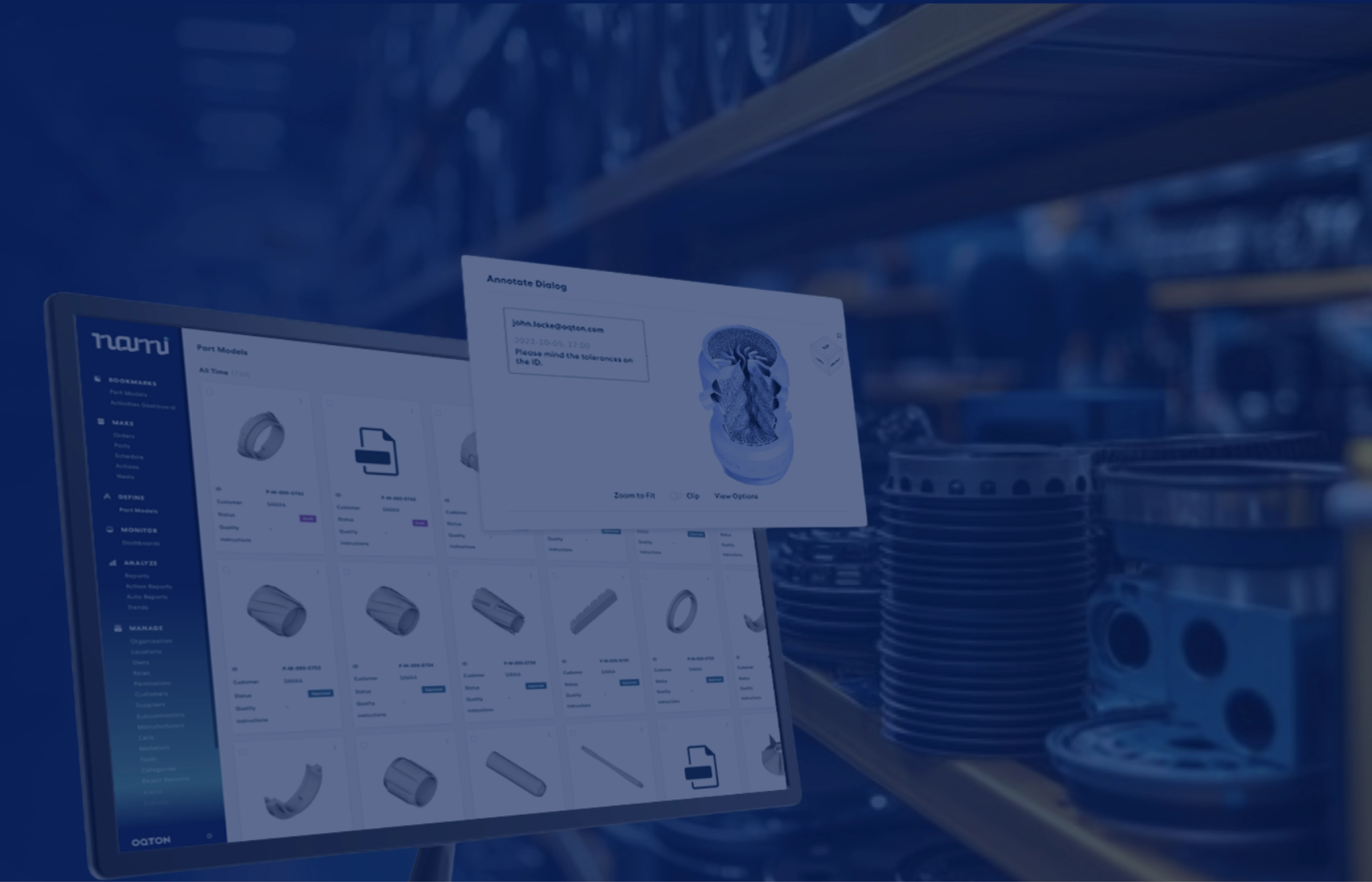
From Physical Shelves to Digital Assets: How Industries Save Millions Through Digital Warehouses
 article
NAMI and Lockheed Martin Collaborate for Additive Manufacturing Conversion Project
 article
NAMI and Saudi Electricity Company
 article
NAMI ACHIEVES AS/EN 9100 CERTIFICATION
 article
NAMI Achieves Nadcap Accreditation
 article
NAMI and MBK.Global Partnership
 article
Choosing the Right Part
 article
NAMI Obtains Military Manufacturing License
 article